• When someone quotes “O death, where is thy sting?” it can land like a slap instead of comfort.

    The words come from 1 Corinthians 15:55. They are true. Because of our Savior Jesus Christ, death does not have the final word. The grave will not win. Our children will live again. We will live again. That promise is real and powerful.

    But in the middle of the pain, those same words can feel like toxic positivity. They can quietly suggest that your grief is too much, that your pain isn’t valid if you truly believe. As if real faith should erase the ache.

    I know this tension well. In May of 2004 I lost my son. Then in December of 2005 I lost his brothers and sister. The years have passed, yet the sting returns—especially around milestones I never got to experience with them. Watching a niece graduate. Seeing another niece marry. And perhaps what hurts most is celebrating my son’s birthdays and life events—the son who was born years later when I found love again and remarried—while knowing his brothers and sister never had those moments. The joy for him is real, but it walks beside a deep sorrow for what was taken.

    I started this blog to speak about child loss. Over time I have come to see how grief touches so much more—the loss of identity, the death of dreams, the future I once imagined. The empty spaces where my children should be still ache in the ordinary days and the special ones.

    **The Bible does not shame us for this.** Jesus wept at Lazarus’s tomb even though He knew resurrection was coming. He did not rush the mourners past their tears. Paul, who wrote about death losing its sting, also spoke of groaning in this broken world while we wait for full redemption.

    So here is what I am learning to hold in both hands:

    The present sting is real and valid. Your grief is not too much. The gut punches that still come years later do not mean your faith is weak. They are the echo of deep love that has nowhere left to go right now. This ache is human. It is honest.

    The ultimate victory is also real. It does not erase today’s pain, but it anchors us so the sorrow does not swallow us forever. Because Christ lives, the story is not over. One day there will be no more missing pieces. No more “what should have been.” Death will truly have no sting.

    This is the hard, beautiful tension of the “already but not yet.” The victory has already been won, yet we still walk through days where the losses sting.

    If you have found me here, my hope is that you feel seen. That your pain is validated. That you sense you are not alone in carrying both the hurt and the hope.

    **A gentle invitation**

    If you feel ready, I would love to hear from you in the comments. What milestone or moment still stings the most for you? How do you hold the pain and the hope on hard days?

    And if you are not ready to share yet, that is okay too. Just know you have met a kindred spirit here. You belong. He sees you. He hears you. Keep walking. I am walking with you.

  • What started out as the desire to find a hobby turned into one of the most meaningful paths of my life. It wasn’t live yet, but I knew the day would come. There were obstacles, self-doubt, imposter syndrome, perfectionism and my nemesis, technical issues but I am here and I launched anyway. It all started roughly 19 months ago with the desire to start a blog about child loss. Then I got caught up in the technical stuff and it didn’t just stall—it was frozen in time. I kept the blog space but it just sat there. I didn’t know if I had it in me to continue because it all became overwhelming.

    Then the flame was ignited by one video. I still remember the date: October 16, 2025. This one video was a narrative about the hymn It Is Well With My Soul with Hugh Bonneville as narrator and the Tabernacle Choir. It was in my recommended feed and it had been for a while. One day I hit play and that was that. I had to launch this blog. I had a message, a purpose I knew would help moms who were grieving, lost in brain fog not knowing if it would ever be lifted. As time went on, I realized Motherhood Rediscovered was going to be much more than posts about the grief that accompanies child loss. I came to a realization as I was writing this post: Grief is bigger than you think. It’s not just losing someone. It’s losing yourself. Your identity. Your timeline. Loss of yourself in all your roles and forgetting to care for yourself. Your dreams. All of it counts. All of it matters!

    Here’s what’s coming:

    When Healing Doesn’t Come But Faith Remains — Faith deepened through loss

    But I’m Not a Mother Anymore — Redefining identity

    When “Death Has No Sting” Feels Like Toxic Positivity-When the promise of victory meets the reality of grief: Holding both without shame

    Time Machine — Breaking free from the what-ifs

    When the Smoke Wouldn’t Clear — Finding yourself when you’re lost in overwhelm and the service of those you love

    As you come along on my journey, my hope is that you will find your voice and see that while our experiences may be different you can see bits of your journey in mine and find the bread crumbs you need to explore your life and become the best version of yourself.

  • When I was young I hated how I looked. I was different and when you’re young that can be one of the greatest challenges. I had friends—true friends—but I longed to have many. Heads Up 7 Up was a fun game we played in school and my thumb was rarely tapped to participate. The only game I was good at was Red Rover and that was only if you were holding my left hand because no one ever got through.

    As I got older I just wanted to be loved. I wanted to get married because my friends were getting married but who would choose me? I chose someone who said he loved me and reminded me he was the only one that ever would. We had 4 children. Then came the greatest pain of all—losing a child. But his death became a doorway. It opened my eyes to not just my reality but my choices up to that point. He became my way out, our savior. It is because of him I was able to step away from a relationship that was not healthy for me or his siblings. Only to lose his siblings as well. But I had time to be their mom, to love them the way they deserved to be loved.

    Through it all I was Little James. I walked with a limp. My right hand was a claw. And I experienced unimaginable grief. I am like Little James because of my physical difficulties, which are often misunderstood. I will never be healed in this life, but my faith and trust in Jesus Christ is strengthened because of them, not weakened. It is because He trusts me to spread His light and His truth despite my trial. I know what I know because out of my trials came knowing—not just believing—that Jesus Christ lives. That because of Him death is not the end and, as I remain faithful, I will be reunited with my children and we will never feel the pain of separation because families can be together forever.

    This is who I am. This is what I know because I’ve lived it. And if you’re asking why I’m doing this—why I’m telling my story—it’s because I know what it feels like to walk with a limp and still be asked to run. To experience unimaginable loss and still be trusted to spread light.

    I’m here because He trusts me. And I’m here because you deserve to know: you’re not alone in this.

  • I didn’t feel like I fit in as a child because I looked different. Oh, how I wanted to fit in. I wanted lots of friends, not just a few.

    If you found me, you may feel a sense of not belonging but wanting so badly to belong. If you found me, you have experienced heartache—the type that changes the very foundation of who you are. If you found me, you are looking for yourself, not as the world sees you, but as you want to be seen in the world. You just don’t know what that means yet.

    I know exactly what it feels like not to feel like you belong. I have experienced heartache that I wouldn’t wish on my worst enemy. The kind that could have crumbled the foundation of my beliefs but instead strengthened and fortified them.

    A few years ago I saw a clip from The Chosen on YouTube. It was a conversation between Jesus and Little James. In this clip, Jesus and Little James are discussing His miracles and those that he has healed. As the conversation concludes Jesus asks him if he wanted to be healed. Little James of course says yes. Then Jesus says something that resonated with me. He said, “I could heal you…I haven’t healed you because I trust you. I need someone who will praise God, believes in me, has faith in me, despite not being healed.”

    Every time I have replayed that clip I am reminded why my life has played out as it has. It’s not to condemn me. It’s to share my story, my strength and my witness that He hears you, that He sees you, and He wants you to share your experience with the world.

    If you have found me, my hope is you find validation, that you find hope and that you find Him in your journey. If you found me, my hope is that you will feel like you have met a kindred spirit like Anne found Diana in Anne of Green Gables.

  • Grief Is Not Linear

    Grief is Not Linear

    I was listening to a Mel Robbins podcast episode that made me think about grief differently. I am well acquainted with grief,it has been many years but I am still learning there’s more to grief than one expects. This episode taught me that.

    Here are some ideas about grief that stood out for me and why.

    Stop comparing your grief to others.

    I have seen this happen. I have done this. When you compare your grief to someone else’s you put yourself either higher or lower on the list. My grief isn’t as bad as yours or my grief is worse than yours. It also makes for comparison between how far someone is in their grief journey. You either put yourself down for not being as far as so and so or you put them down for not moving forward as quickly as you. That’s not fair.

    What’s the worst grief? Yours!

    This one really hit my heart because I have caught myself comparing my grief to others or there have been instances that others compared their grief to mine. No one’s grief is worse than yours. There is no comparison. Your grief matters! Their grief matters.

    Grief is not linear.

    There is no recipe or step by step process in grief. Yes, there are stages, but you may experience one and then another and be back at one. That is okay. There is no one right way to grieve. No right way to mourn.

    Grief needs to be witnessed.

    It was pointed out to me recently that a friend of mine just wanted her grief to be witnessed. She asked me how I made it to that first anniversary. I had no answer. Later I realized she just wanted me to be a witness to her loss. To the unimaginable fact that the daughter she loved has been gone for a year.

    You are the proof that the one you love and lost existed.

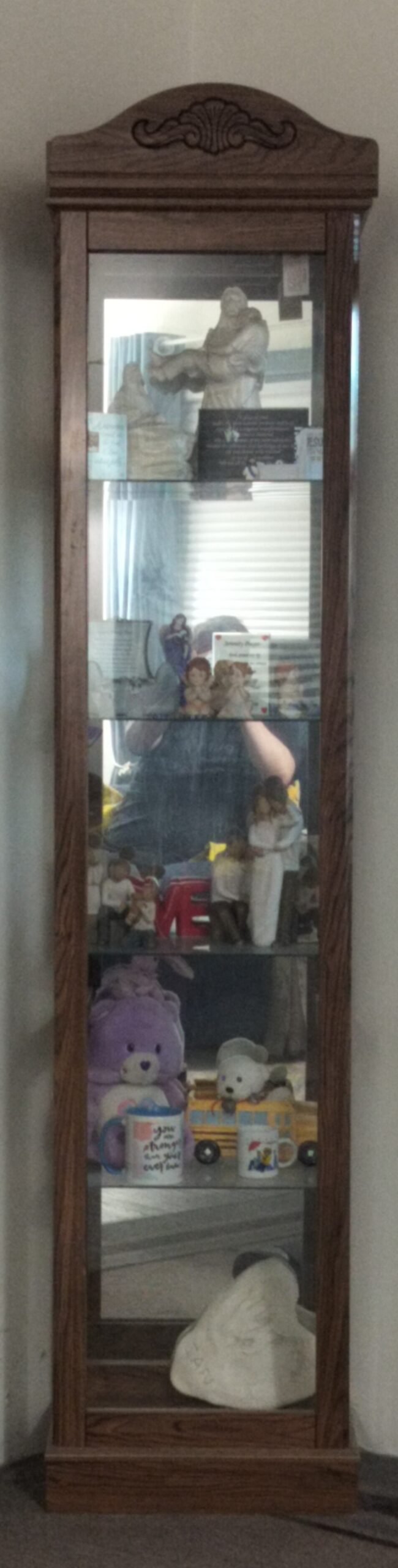
    We all have different things we keep as physical reminders that our loved ones existed. I have a curio cabinet with a bus, a bear that my daughter never saw because it was her Christmas present she never unwrapped, jingle bells from my boys’ Christmas concert and hand and footprints and even a shirt that my son wears, but it’s not just the physical items that remind me that they existed. I am proof and so are you.

    Even after all these years, there are ideas and concepts I didn’t know or fully understand about my grief. I am grateful for this newfound knowledge. My hope is that you will take these insights and come to your own understanding because your loss matters.

    If you’re ready, share an insight of grief that you have experienced.

    If not, that’s okay. If you would like you could set a timer for 5 minutes and write how you feel about grief. There is no right way to grieve. There is no right way to mourn.

    If you’d like to listen, search for ‘Mel Robbins David Kessler’—you can watch on YouTube or listen on Spotify or your preferred streaming service.

  • “If only I had noticed sooner.”

    “What if I’d said something different?”

    “If only we’d left five minutes earlier.”

    The what-ifs play on repeat. You rewind the day, the conversation, the moment, searching for the version where the loss doesn’t happen. Where you get to keep what you lost. Where you get a better ending or outcome.

    I know this time machine. I’ve lived in it.

    The Dreams That Came

    After my first loss, I had this one vivid dream that played on repeat, I was sleeping on the couch when my son woke me up. ‘It’s just a dream,’ he said. ‘I didn’t die. I am right here.’ When I woke, the grief hit all over again—but his presence in that dream stayed with me. I’d wake up thinking, ‘It was just a dream, but oh how I wish it were true!’ One more day. That’s all I wanted. Just one more day with you. When ‘One More Day’ by Diamond Rio came on the radio, it felt like my son saying hello. My mind was giving me space to process what I couldn’t face during the day.

    The dreams faded when I no longer needed them. They’d helped me see what I couldn’t see before: the relationship I was in wasn’t healthy. When my spouse wanted to go back to how things were, I knew I couldn’t. My mind had been a gentle friend, showing me the truth in the space grief created.

    After the second loss—losing the three children I had left—the dreams came again. Different scenarios where I tried to save them, only to lose them all over again anyway. I even tried to keep the dreams going, wanting a different ending. But my mind knew: “You’ve done the work, it’s time to let go.” The dreams stopped. My mind was giving me space to process.

    The “What If” Game

    Years later, with my current husband, I played a different version of the time machine game. “What if we’d found each other first?” We’d imagine different timelines, different beginnings, different paths to the same place.

    Then I realized: if even one thing changed, my children would be different. Or they wouldn’t exist at all. My life is exactly as it should be.

    Years later, I watched a movie called About Time. A man is told by his father that he can go back in time. With this newly realized ability, he goes back in time to help his sister, then returns to find a different child than the one he left. The movie validated what I already knew: you can’t change the past without losing something in the present. My husband and I still play the “what if” game once in a while. But in the end, we both know it’s just a game, and our life together is just as it should be.

    The Truth About Time Machines

    And sometimes, if we’re not careful, the what-ifs don’t just replay—they spiral deeper. The questions multiply. The blame-searching intensifies. Our mind, once trying to help us process, becomes our frenemy. But that’s a story for another time.

    Any loss has its time machine:

    • Lost a child: “If only I’d noticed sooner…”
    • Lost custody: “If only I’d said this differently…”
    • Lost a spouse: “If only I’d seen it coming…”
    • Lost yourself: “How did I lose sight of my hobbies?…”

    You’re not broken for being there. Your loss matters. This is how our minds try to make sense of the senseless.

    The Invitation

    I see you stuck in the what-ifs, replaying that day, bargaining with time. This is normal. You’re not weird. I still find myself bargaining with time when triggers hit or when life throws me a curve ball.

    The great thing about the time machine is: You’re allowed to visit. And someday, when you’re ready, you’re allowed to leave too. Your mind might be trying to help you process—or it might be time to step away. Only you can know which.

    What Happens Next

    If you’re ready: Write down one what-if. Get it out of your head and onto paper. Then write this underneath it: “I cannot change the past, but I can choose today.” Journal about what that means for you right now. Or share a “time machine moment” in the comments if you’re comfortable.

    If you’re not ready: That’s okay too. Sometimes just knowing the time machine is normal—that you’re not broken for being stuck in it—is enough for today. I see you. You’re not alone in this.

  • My dear friends,

    If you have found this blog, you might be looking for answers to one of the most difficult and excruciating paths of this journey we call life. The path I am speaking of is motherhood after the loss of a child. Life without your child may be leaving you feeling as though you no longer hold that title because the little one who gave you that title is gone. Grief is a path that we walk alone despite those surrounding us, because each experience with loss is different. I know this path intimately. I have walked it. I am still walking it.

    December 21, 2005.

    That was the day I learned death had taken my three remaining children from this earth. That was the day I truly felt I had lost the title “mother” because now I had no children to call me Mom. Christmas was just a few days away. There were presents that would never be unwrapped. Toys that would never be played with, games that would never be played.

    I had already experienced loss before this. But this? This was different. This was final in a way that should have broken me completely.

    Yet I felt calm.

    It’s hard to explain, and I don’t expect everyone to understand. But I had received a sacred assurance just days before that my children would be taken care of—that I could trust them to something greater than myself. When I learned they were gone, that peace held me like a shield. They were safe. They were beyond suffering.

    People treated me differently after that—carefully, with kid gloves, like I might shatter if they spoke too loudly. They meant well, but their gentle handling only reminded me of what I’d lost.

    The first time someone asked, ‘Do you have children?’ I froze. What do I say? The truth felt impossible to speak: ‘No. I have no children. They passed away.’ Each word felt like swallowing glass. In that moment, I didn’t feel like a mother. But the reality was undeniable—I had four children. They died, but they were still mine. That denial was my grief speaking, not the truth.

    But nothing hurt quite like the first Mother’s Day after I lost my other children. May 9 had been Mother’s Day the year I lost my first child. Now, every May—with its fixed anniversary and Mother’s Day—would be forever marked by the weight and memory of all four losses.

    When someone wished me a happy Mother’s Day, I heard myself say it out loud for the first time:

    “But I’m not a mother anymore.”

    I don’t remember when that stopped being true for me. There wasn’t a single moment when everything shifted, no lightning bolt of clarity that said, “You ARE still a mother.”

    It happened slowly, quietly, over time. One day I realized I was looking forward to Mother’s Day again instead of dreading it. One day, the truth settled back into my bones: I am a mother. I have always been a mother. I will always be a mother.

    I am a mother to children who have died and a mother to a child who is here. Both identities have shaped the mother I am today. The grief of one doesn’t erase the love and presence of the other.

    Small Steps Forward:

    If you feel ready: Say it out loud today, even if you don’t fully believe it yet: “I am a mother.” Let your voice carry that truth, even through the doubt.

    If not, that’s okay: You don’t have to claim the title out loud today. But know this: being a mother isn’t something that can be taken from you, even by death. That truth will wait until you’re ready to speak it.

  • Have you ever wondered why some people aren’t healed, even when you know God could heal them?

    I was watching a clip on YouTube from The Chosen. It was the scene where Little James asks Jesus why he wasn’t healed. Jesus’ response strikes me to my core every time I see it (I have watched it more than once). I’m paraphrasing, but he said something like: “I could heal you, and you could share your healing testimony with others. I haven’t healed you because I trust you. I need someone who will praise God, believes in me, has faith in me, despite not being healed. That is you Little James. You know that you will spend eternity with no suffering.”

    The first time I watched it I knew I was Little James.

    The Physical Reminder

    When I was an infant, my mom knew something wasn’t right. I cried constantly. Something was wrong with my movement, even for a baby. Finally, when I was three months old, doctors determined I had Hydrocephalus: a buildup of spinal fluid in my brain. There was no way for the fluid to drain, so the pressure kept building. That’s why I cried so much. My head hurt.

    The solution was a shunt that drained the excess fluid from my brain to my stomach, where my body could dispose of it naturally. I am 49 years old and fortunate to still be here. Over the years, I’ve only needed a few revisions to the shunt, including a complete replacement a few years ago when it cracked.

    But I live with the evidence every day: I have a claw for a right hand. I can use it, but only enough to get by when a task requires more than one hand. I walk with a limp. As an adult, I’m fine. But as a child and teenager, I endured relentless teasing.

    I had friends who stood by me. I experienced first love. There were good moments too. But the teasing wounded something deeper: my sense of self-worth.

    I married young because all my friends were getting married. Then tragedy struck and I was alone again. But I had my family’s support through it all. I was better off for it. In time I found love again. A man who loves me, tells me I’m beautiful, and takes care of me and our son.

    I wasn’t healed. But I’m still here.

    The Story I Heard

    I recently heard a story about Dallin H. Oaks, the newly appointed prophet of the Church of Jesus Christ of Latter-day Saints. When he was young, his toddler cousin was found in a ditch. By the power of the holy priesthood, the child was brought back to life.

    Healing was possible. Miracles were real.

    My Children

    My first child who passed away could have been healed by that same priesthood power. He wasn’t.

    My three remaining children, there could have been some kind of divine intervention. Someone arriving at the right time. Something that might have saved them. There wasn’t.

    And yet, I still believe.

    “You Have Done All You Can Do. Let Me.”

    Before I lost my three remaining children, I went to the temple to pray. I was concerned for their safety and wanted to know what I could do. As my prayer concluded, I heard a voice in my mind: “You have done all you can do. Let me.”

    A calm came over me that is difficult to put into words. It was a calm that assured me, that protected me. When the news came that my three remaining children had died, that calm held me like a shield.

    I had done all I could do and so I just needed to trust Him. Trust in His words, “Let me.”

    Let Me

    Amid the worry and concern I went to the temple to pray.

    Surrounded by light and my mind clear as to what I need to do.

    I bowed my head and I prayed for you.

    I heard a voice so soft and clear, “You have done all you can do. Let me.”

    So, I left the beautiful room filled with light.

    I was no longer afraid for you because I trusted in him and I trusted that everything would be alright.

    Then the news came that death had taken you away from me.

    You were forever in his arms and I was reminded of his words, “You have done all you can do. Let me.”

    Peace filled my body from head to toe.

    You were with him and it comforted my soul.

    I found that I still trusted in His words—simple yet profound—’Let Me.

    What Faith Looks Like When Healing Doesn’t Come

    I have not just one or two reasons to turn away from faith and from God. I have several.

    I could have chosen bitterness. I could have chosen anger. I could have walked away from belief entirely.

    Instead, I chose faith. I chose trust. I chose knowing.

    My faith has grown beyond hoping into certainty: God lives. Jesus is the Christ. I will be with my children again, never to be separated from them.

    I am Little James. I wasn’t healed. My children weren’t saved. But I still believe.

    A Note to Mothers

    If you’ve asked, “Why wasn’t my child healed?” I see you.

    If you’re wondering how to keep believing when the miracle didn’t come, I see you.

    This blog is for you: the mothers who are still standing, still wanting to believe, even when the miracle you prayed for didn’t come.

    Throughout these posts, I’ll share how I worked through grief, brain fog, and loss of identity. But here’s what matters: I adapted what others suggested to fit my individual needs. In recent years, I’ve listened to podcasters like Mel Robbins, Lewis Howes, Anita Ojeda, and many others. I encourage you to do the same. Take what resonates, leave what doesn’t.

    My hope is that you’ll create your own roadmap to healing, and maybe, when you’re ready, help others too.